Find the Perfect Filament for 3D Printing for Every Project
Looking for the right 3D printing filament for your next project? Discover PLA, ABS, PETG and specialty materials designed for every application. From beginner-friendly prints to professional engineering prototypes, our guide covers properties, printing tips and material selection to help you achieve perfect results every time.
The six most commonly used 3D printer filaments—PLA, ABS, PETG, TPU, nylon, and PC—account for a significant portion of the filament market, with millions of kilograms sold annually worldwide. The large volume of 3D printing filament sold highlights the growing demand and commercial scale of the industry. The diverse range of 3D printing filaments allows for applications from simple decorative models to high-performance industrial parts.
Introduction to 3D Printing
3D printing is a cutting-edge manufacturing process that allows users to create complex objects by building them layer by layer from digital models. At the core of this technology is the 3D printer, which heats and extrudes plastic filament through a precise nozzle to form detailed shapes and structures. The most commonly used filaments are polylactic acid (PLA) and acrylonitrile butadiene styrene (ABS). PLA is a biodegradable plastic known for its high durability and ease of use, making it ideal for both beginners and professionals. ABS is a rigid, strong plastic commonly selected for professional applications requiring enhanced mechanical properties. With the right combination of 3D printer, filament, and print settings, users can create a wide variety of models, prototypes, and functional machines with impressive accuracy and reliability. This versatility makes 3D printing a popular choice for both hobbyists and professional manufacturers.
3D Printing Filaments for Every Application
Whether you’re creating functional parts or artistic pieces, there’s a filament material perfectly suited for your project needs. 3D printing filament is typically extruded from plastic, which is heated, melted, and formed into spools for use in 3D printers. Filaments range from easy-to-use materials like PLA to durable engineered plastics like ABS and PETG, each requiring specific printing conditions.
Beginner & Hobby Printing
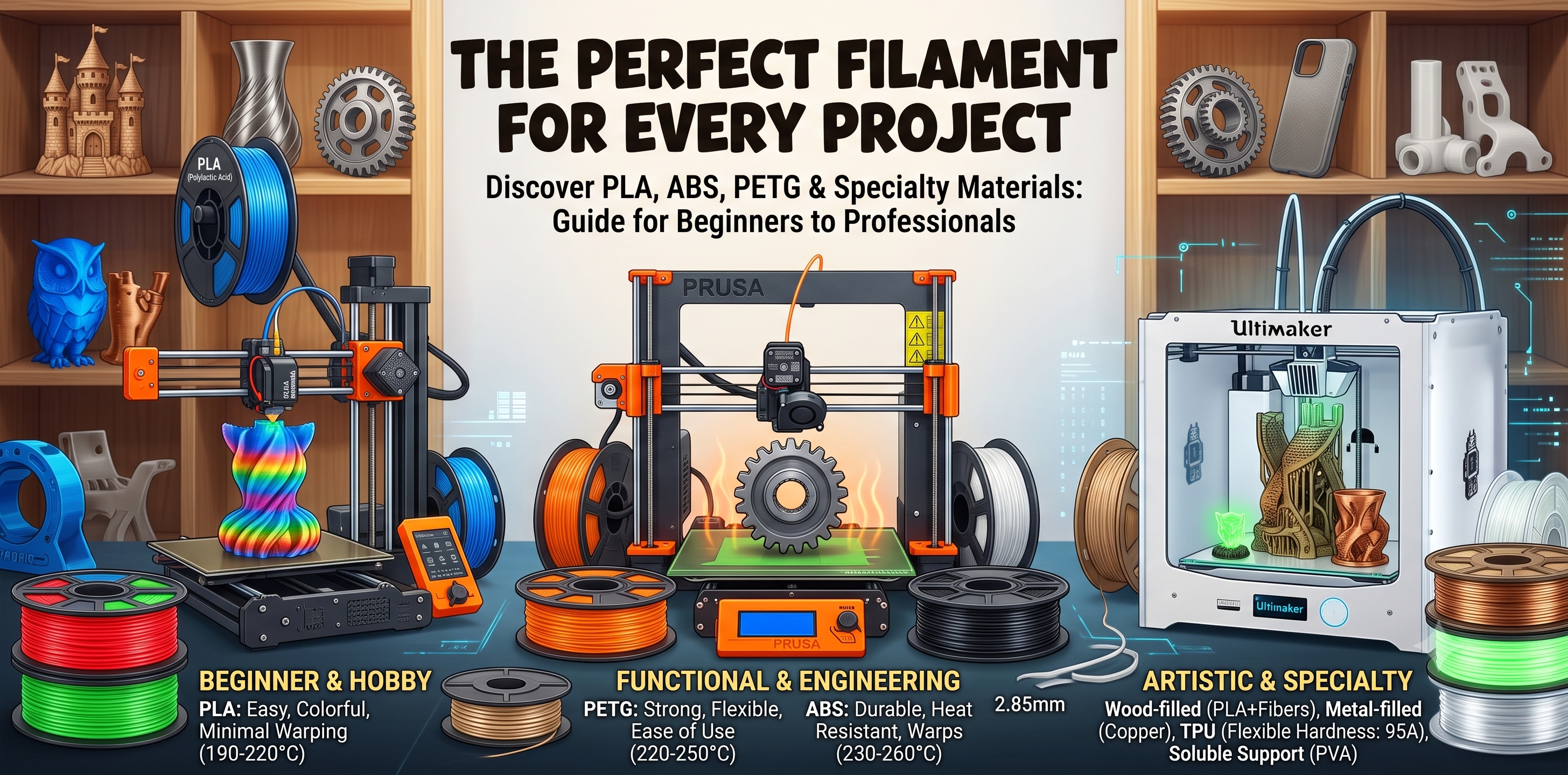
PLA (polylactic acid) is the most popular type of 3D printer filament, known for its ease of use and variety of colors, making it suitable for a wide range of applications. This material works beautifully on most entry-level machines without requiring a heated bed or enclosure, printing at temperatures between 190-220°C with minimal warping.
PLA is generally easy to print with due to its lower printing temperature and reduced warping, making it suitable for a wide range of applications. Regular PLA offers excellent quality for learning and experimenting, with cost typically ranging from $15-30 per spool. PLA is biodegradable and emits almost no odor, making it safe for indoor use, whereas ABS releases strong, potentially harmful fumes.
Functional & Engineering Parts
When your projects demand mechanical strength and high durability, engineering-grade filaments deliver professional results. Acrylonitrile butadiene styrene (ABS) is tough, durable, and highly heat resistant, but challenging to print due to high shrinkage and warping, necessitating a heated bed and often an enclosure.
PETG (Polyethylene Terephthalate Glycol) is a versatile filament that combines the best characteristics of PLA and ABS, offering strength, flexibility, and ease of use. PETG is known for its balance of strength, flexibility, and ease of use, making it a versatile material for functional objects that may experience stress. PETG and similar filaments are often used to print functional tools, prototypes, and mechanical parts due to their strength and durability.
Nylon, also known as Polyamide, is a strong and durable filament that is increasingly used in 3D printing for functional prototypes and end-use parts due to its excellent mechanical properties. For applications requiring extreme heat resistance and impact protection, polycarbonate delivers performance suitable for automotive and industrial manufacturing.
Artistic & Specialty Projects
Wood-filled filaments typically contain 70% PLA and 30% wooden fibers, providing a natural appearance and texture to 3D prints. These composites can be sanded and stained, creating models with authentic wood-like aesthetics.
Metal-filled filaments incorporating copper, bronze, or aluminum powders produce weighted prints with genuine metallic appearance that can be polished to a brilliant finish. Glow-in-the-dark filament contains phosphorescent materials that absorb light and emit it, allowing prints to glow after being exposed to light. Color-changing filament alters its hue based on temperature changes or UV radiation intensity, making it popular for aesthetic applications.
TPU (Thermoplastic Polyurethane) is a flexible filament known for its elasticity and durability, making it ideal for functional parts that need to endure wear and tear. TPU/TPE (Thermoplastic Polyurethane/Elastomer) are rubber-like materials used for seals and gaskets, requiring slow printing speeds to prevent jamming. With certain filaments like polypropylene (PP), bacteria can hang out in the layer lines created during FDM printing, which affects their suitability for food-safe or hygienic applications.
Choose the Right Filament for Your 3D Printer Setup
The right filament selection depends on your printer’s capabilities and your experience level with 3D printing. A filament’s chemical and physical properties dictate the necessary printer settings and the ultimate success of the print.
For Entry-Level FDM Printers
Begin your 3D printing journey with PLA and PLA+ variants that print at low temperatures without heated beds. Most home printers utilize 1.75mm filament, and using the wrong diameter can cause clogs or damage. Confirm your printer specifications before purchasing to protect your equipment.
Avoid materials requiring high print temperature settings or special ventilation when starting out. PLA’s forgiving nature lets you focus on learning slicer settings and calibration without battling warping or adhesion issues.
For Upgraded Printers with Heated Beds
With a heated bed capable of reaching 70-110°C bed temperature, you can plan projects using ABS, PETG, and ASA. Materials like ABS and Polycarbonate (PC) shrink upon cooling, causing warping and requiring a heated bed and chamber.
An enclosure helps maintain consistent temperature throughout the print, preventing layer separation and improving surface quality. Moderate-temperature engineering materials like nylon and ASA become accessible with proper environmental control.
For Professional/Industrial 3D Printers
High-performance polymers like PEEK and PEI demand specialized equipment with nozzle temperatures exceeding 300°C and heated chambers. These rigid materials require hardened steel or ruby nozzles, as standard brass components wear quickly when processing abrasive filaments.
Specialized filaments are used for applications requiring flexibility or extreme strength, such as TPU/TPE and Nylon. Post-processing techniques including annealing and chemical smoothing are commonly employed to achieve professional-grade results.
For Multi-Material Systems
Filaments like PVA and HIPS are used as soluble supports, dissolving in water or chemicals, respectively, for complex geometries. PVA dissolves in water, making it ideal for PLA-based prints, while HIPS requires limonene and pairs well with ABS.
When switching between different filament types, thorough nozzle cleaning prevents contamination. Composite/Filled Filaments mix base plastics with materials like carbon fiber or metal, which can wear down standard brass nozzles—plan to replace your nozzle more frequently when using these materials.
Understanding Filament Properties and Performance
A quality 3D printing filament should deliver consistent results and meet your project’s mechanical and aesthetic requirements. Understanding material properties helps you create successful prints on your first attempt. When switching between different filaments, it may be necessary to apply gentle force to the extruder to remove residual material and ensure clean transitions.
Thermoplastic Base Materials
PLA offers excellent printability with tensile strength around 45-50 MPa, though its glass transition temperature of approximately 55-65°C limits high heat applications. Unlike other materials, PLA biodegrades under industrial composting conditions.
ABS delivers superior chemical resistance and temperature tolerance up to 95-100°C heat deflection, making it suitable for functional parts. However, ABS is more brittle than it appears and requires careful temperature management during printing.
PETG provides medium-level heat resistance around 70-80°C while maintaining clarity and chemical resistance. This balance of properties makes PETG generally preferred for functional prototypes that don’t require extreme durability.
Flexible & Rubber-Like Materials
TPU is characterized by Shore hardness ratings, typically ranging from 85A to 95A. Softer formulations below 85A create highly flexible prints but demand direct-drive extruders and careful speed adjustments.
Printing flexible materials requires slower speeds—typically 20-35mm/s—to prevent jamming in the filament path. These materials excel in applications requiring elasticity, impact absorption, and resistance to repeated bending.
Composite & Filled Materials
Carbon fiber reinforcement dramatically increases stiffness and strength, with some carbon fiber-reinforced nylon achieving tensile strengths exceeding 170 MPa. However, these materials are abrasive and create brittle interlayer bonds.
Metal powder additives like bronze or copper create weighted prints with authentic metallic appearance. Sintered metal filaments can even conduct electricity for specialized applications. Conductive filament is designed to conduct electricity, making it suitable for small DIY electronic projects and low-voltage circuitry applications.
Wax and castable filaments are used for investment casting, allowing you to cast detailed metal parts by creating burnout models and molds for industries like jewelry and dentistry.
Safety and Handling
Ensuring safety and proper handling is essential for a successful 3D printing process. Always be mindful of the heated bed and nozzle, as these components reach high temperatures that can cause burns or other injuries. Monitor bed temperature and nozzle heat closely during operation. Handle filament with care, as many types can be brittle and may snap if bent or stressed. Moisture is another important factor—filament exposed to humidity can absorb water, leading to print defects and reduced quality. To protect your filament, store it in a cool, dry place and use a desiccant to maintain optimal conditions. Regularly clean the nozzle and check the heated bed to prevent clogs and ensure consistent performance. Choosing high-quality filament from trusted suppliers helps minimize defects, and fast shipping ensures you receive fresh material ready for use. By following these tips and maintaining your 3D printer, you can achieve reliable, high-quality results with every print.
How to Print Successfully with Different Filaments
Proper printing techniques and settings optimization ensure quality results across all filament types. Following material-specific guidelines protects your equipment and produces professional outcomes.
Basic Printing Guidelines
Standard print temperature ranges vary significantly: PLA prints at 190-220°C nozzle temperature with 50-60°C bed, PETG requires 220-250°C nozzle with 70-85°C bed, and ABS demands 230-260°C nozzle with 90-110°C heated bed temperature.
Layer height recommendations depend on nozzle diameter rather than filament diameter, though using the correct 1.75mm or 2.85mm spool for your machine remains critical. Cooling fan settings dramatically affect layer adhesion—PLA benefits from high cooling, while ABS typically requires fans disabled.
Print speed adjustments based on material flow characteristics help prevent common issues. Flexible materials require slow speeds, while rigid materials like PLA tolerate faster printing.
Advanced Printing Techniques
Nylon is hygroscopic, meaning it absorbs moisture, which can affect print quality; therefore, it should be stored in a cool, dry place. Humidity-sensitive materials like Nylon and PVA require dry storage to maintain print quality and prevent absorption of moisture. To avoid poor print quality, filaments should be stored in airtight containers with desiccant to prevent moisture absorption.
Hardened steel or ruby nozzles are essential for abrasive materials containing carbon fiber, glass fiber, or metal particles. These upgrades protect your printer from accelerated wear while maintaining print precision.
Enclosure printing benefits materials prone to warp, including ABS, ASA, and engineering plastics. Post-processing techniques like annealing improve part strength, while chemical smoothing with acetone creates polished surfaces on ABS prints.
Recycled filament is produced from plastic waste that has been processed and reformed into new filament spools, supporting a circular economy and reducing the environmental footprint associated with 3D printing. Recycled filaments are ideal for prototyping, creating non-critical components, or producing large volumes of prints where top-tier mechanical performance isn’t essential. When printing with recycled filament, it’s important to fine-tune your printer settings to account for possible variations in diameter or consistency, as many of these materials absorb moisture easily.
Select Your Perfect 3D Printing Filament
Explore our comprehensive collection of PLA, ABS, PETG and specialty filaments. Choose the right diameter, color and material properties to bring your 3D printing projects to life with professional-quality results.
Browse by material type to find filaments matching your project requirements—from beginner-friendly PLA to engineering-grade nylon and flexible TPU. Compare specifications like tensile strength, flexibility and temperature resistance to confirm compatibility with your applications.
Read reviews and printing tips from experienced 3D printing community members to learn from their successes. Start with small quantities to test compatibility with your printer before bulk purchases, and take account of your specific hardware capabilities.
With fast shipping and many types of filaments commercially available, your next project is ready to begin.