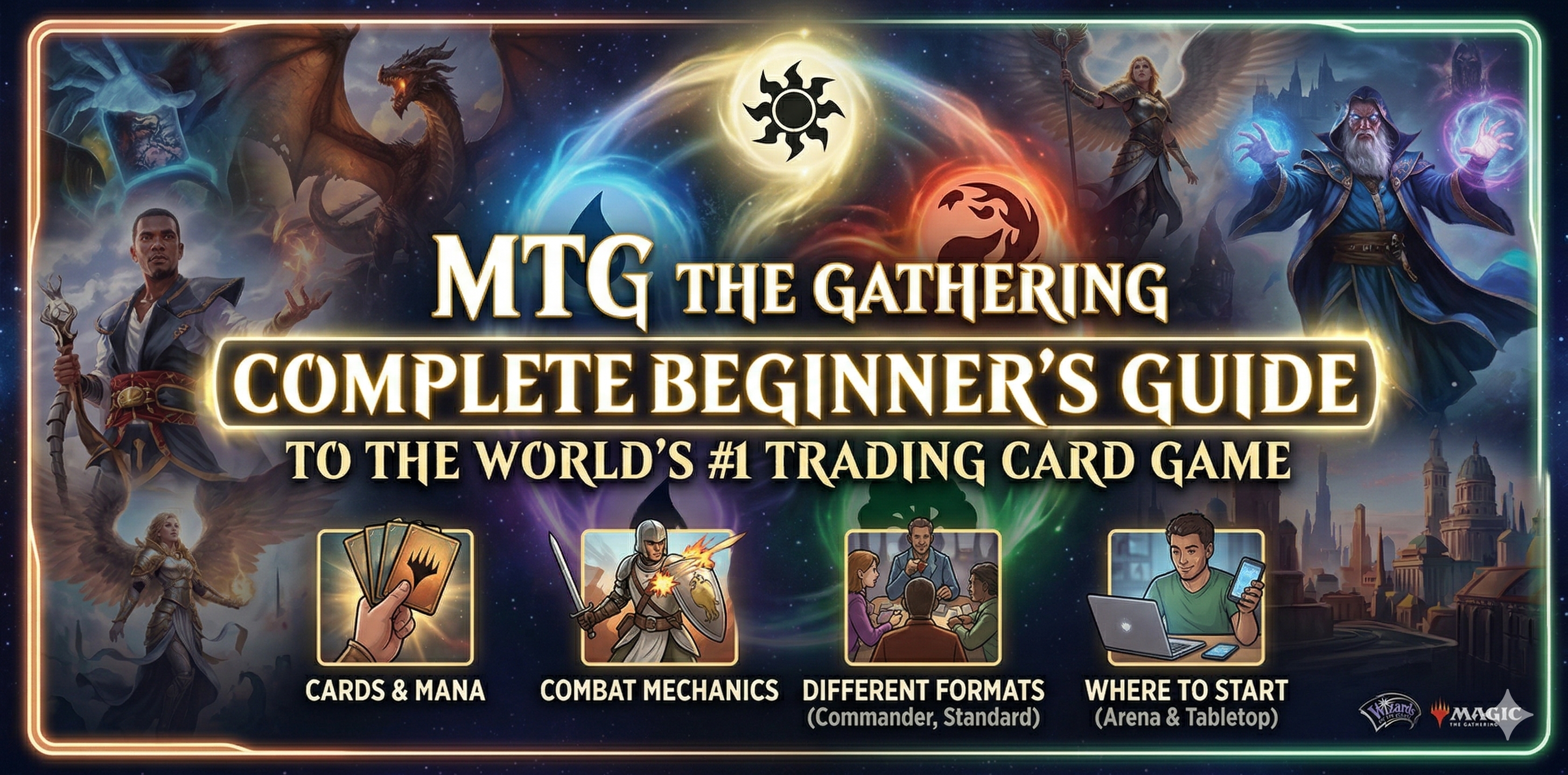
MTG Magic The Gathering: Complete Beginner’s Guide to Card Game
Introduction
Magic: The Gathering (MTG) stands as the original trading card game that launched an entire industry when Richard Garfield created it for Wizards of the Coast in 1993. The game underwent a general release on August 5, 1993, and was an immediate success for Wizards of the Coast. This comprehensive guide covers everything from basic rules and core gameplay mechanics to different formats and practical steps for starting your MTG journey.
Whether you’re a complete beginner who has never held magic cards or an experienced player seeking a thorough reference, this guide addresses your needs. Understanding MTG matters because it offers one of the deepest strategy experiences in any card game, combining deck building creativity with tactical decision-making that rewards both new players and veterans alike. The gameplay is known for its chaos—an unpredictable and dynamic nature that arises from constant transformation, conflict, and the balance between order and chaos.
By February 2023, Magic: The Gathering had amassed approximately fifty million players worldwide. Wizards of the Coast was acquired by Hasbro in 1999 for $325 million, making Magic a Hasbro game. The success of Magic: The Gathering also led to the creation of similar games by other companies as well as Wizards of the Coast themselves.
Direct answer: Magic: The Gathering is a strategy card game where two or more players act as powerful wizards called Planeswalkers, using spells, creatures, and artifacts to reduce their opponent’s life total from 20 to 0—or achieve alternative victory conditions through clever play.
Key outcomes from this guide:
-
Understanding fundamental rules and game mechanics
-
Choosing between different play formats based on your preferences
-
Building your first deck with confidence
-
Finding your local game store and community events
-
Navigating both physical and digital platforms like MTG Arena
Understanding Magic: The Gathering Fundamentals
At its core, Magic: The Gathering casts you as a Planeswalker—one of the powerful wizards capable of traveling between different worlds in the MTG multiverse. This concept drives everything from card themes to gameplay mechanics, as you summon creatures from various planes, cast spells drawn from different schools of magic, and deploy artifacts from countless civilizations.
Magic: The Gathering is also known as a portable game, making it easy to play in a variety of settings, whether at conventions or in casual environments, thanks to its collectible cards and compact format. The game has continued to release expansions and sets through 2023, with an increasing number of expansions released each year. Since its launch, MTG has significantly evolved in rules, lore, and formats. Additionally, MTG is organized into five colors—White, Blue, Black, Red, and Green—each offering distinct strategies for players.
Basic Game Components
The game uses seven primary card types that form the foundation of every deck. Each card a player draws from their deck represents a magical spell which can be used to their advantage in battle. Card information, including art and mechanics, is displayed on each card in a consistent format, with about half of the card face showing the card's art and the other half listing its mechanics.
Lands generate mana, the magical resource powering all your spells. The five basic land types—Plains, Island, Swamp, Mountain, and Forest—produce white, blue, black, red, and green mana respectively. Unlike other cards, basic lands have no copy limit in constructed formats.
Creatures serve as your primary fighting force, featuring power and toughness stats that determine combat effectiveness. From dragons to vampires to soldiers, creatures battle your opponent directly.
Instants and Sorceries represent one-time magical spells. Sorceries can only be cast during your main phases, while instants offer flexibility to respond at almost any time.
Artifacts are magical objects that remain on the battlefield, providing ongoing effects. Enchantments work similarly, representing persistent magical effects. Planeswalkers are ally cards representing other powerful wizards who fight alongside you with unique abilities.
The mana system creates MTG’s strategic depth. You typically play one land per turn, gradually building resources to cast increasingly powerful spells. Managing your mana efficiently separates skilled players from beginners.
Core Game Mechanics
Each turn follows a structured sequence that both players must understand:
Turn Structure: Untap → Upkeep → Draw → First Main Phase → Combat → Second Main Phase → End Step
During your untap step, you tap your lands and creatures to ready them for action. The draw step gives you a new card (except on the very first turn of the game). Main phases allow you to cast spells and play lands, while the combat phase handles creature battles.
The Stack System governs how spells and abilities resolve. When you cast spells, they go onto “the stack” before resolving. Your opponent can respond with their own instants or abilities, creating layers of interaction. The stack resolves last-in, first-out—meaning the most recent spell resolves first.
This system creates exciting moments where players pass priority back and forth, building complex chains of responses. Understanding the stack transforms you from a casual player into someone capable of advanced strategy.
MTG Card Types
Magic: The Gathering features a diverse array of card types, each bringing its own unique flavor and function to the game. Understanding these card types is essential for any player looking to build a strong deck and develop a winning strategy.
Creatures are the backbone of many decks, representing everything from mighty dragons to clever elves. These cards can attack your opponent and defend against incoming threats, making them central to most battles. Each creature has power and toughness values, which determine how much damage it deals and how much it can withstand.
Instants and Sorceries are magical spells you cast to influence the game in powerful ways. Instants can be played at almost any time, even during your opponent’s turn, allowing you to respond to threats or surprise your opponent. Sorceries, on the other hand, can only be cast during your own main phase, but often have game-changing effects.
Enchantments and Artifacts are permanents that stay on the battlefield, providing ongoing benefits or unique abilities. Enchantments often represent magical auras or persistent effects, while artifacts can be anything from mystical equipment to powerful relics that enhance your strategy.
Lands are the foundation of every deck, generating mana—the magical energy required to cast spells and summon creatures. Managing your lands and mana efficiently is a key part of mastering Magic: The Gathering, as it allows you to cast spells at the right moment and outmaneuver your opponent.
By learning how each card type works and how they interact, you’ll be better equipped to build a balanced deck, cast spells effectively, and develop strategies that lead to victory in every game.
How to Play Magic: The Gathering
Building on these fundamentals, let’s examine exactly how a game of Magic unfolds from start to finish.
Game Setup and Victory Conditions
Deck Requirements vary by format, but standard constructed formats require minimum 60-card decks with up to 15-card sideboards. Players typically create decks from their own library of cards for Constructed formats. You may include no more than four copies of any card except basic lands. Commander format uses exactly 100 cards with singleton rules (one copy of each card). Deck construction requires strategy; players must choose cards to play from thousands of cards, requiring players to evaluate the power of their cards, the possible synergies between them, and their possible interactions with the cards they expect to play against.
Players can only play one land card per turn, and most lands provide a specific color of mana when tapped. More powerful spells require larger amounts and more specific combinations of mana.
Starting Life Totals: Most formats begin at 20 life, while Commander starts at 40 life to accommodate multiplayer dynamics.
Mulligan Rules: Each player draws seven cards initially. If unsatisfied, you may shuffle and draw a new hand with one fewer card, repeating until satisfied. The London Mulligan system (current standard) lets you draw seven each time, then put cards equal to your mulligan count on the bottom of your library.
Victory Conditions:
-
Reduce your opponent’s life to zero
-
Force them to draw from an empty library
-
Achieve alternative win conditions printed on specific cards
-
In Commander, deal 21 combat damage with a single commander to one opponent
Players typically win by reducing their opponent's life total to zero, usually through combat damage by attacking with creatures. Players can lose the game by depleting their deck, losing all their life, or through other in-game effects.
Turn Sequence and Priority
Untap Step: All your tapped permanents untap automatically. No player can cast spells during this step.
Upkeep Step: Triggered abilities that say “at the beginning of your upkeep” happen here. Both players can respond with instants.
Draw Step: Draw one card. Again, both players receive priority to cast instants or activate abilities.
Main Phases: Cast creatures, sorceries, artifacts, enchantments, and planeswalkers. Play one land if you haven’t this turn. Your first main phase occurs before combat; your second main phase follows combat.
Combat Phase: Declare which creatures attack, then your opponent declares blockers. Damage resolves simultaneously (except for first strike creatures).
End Step: “At end of turn” triggers happen. Cleanup removes damage from creatures and reduces your hand to maximum size if needed.
Priority passes between players throughout most steps, creating windows for interaction. When both players pass without taking action, the game advances.
Combat System
Combat represents MTG’s most dramatic moments. Here’s how battle unfolds:
Declaring Attackers: Only untapped creatures without “summoning sickness” (creatures that entered this turn without haste) can attack. Tap each attacker you choose. In multiplayer, declare which opponent or planeswalker each creature attacks.
Declaring Blockers: Your opponent assigns their untapped creatures to block your attackers. Multiple creatures can block a single attacker, but each blocker can only block one creature.
Damage Assignment: Each creature deals damage equal to its power. A creature receiving damage equal to or greater than its toughness is destroyed. Damage remains marked until end of turn but doesn’t reduce toughness.
Key Combat Keywords:
-
Flying: Can only be blocked by creatures with flying or reach
-
First Strike: Deals damage before normal creatures
-
Trample: Excess damage beyond lethal carries through to defending player
-
Deathtouch: Any damage dealt destroys the recipient
-
Lifelink: Damage dealt also gains you that much life
Different Ways to Play Magic: The Gathering
With core gameplay understood, you can choose from numerous formats—each offering distinct experiences based on card pools, deck construction rules, and social dynamics.
Popular Game Formats
Standard uses only the most recent sets, rotating older cards out as new ones release. This keeps the format fresh and accessible, with lower entry costs since you only need cards from the latest set and recent expansions. Deck minimum: 60 cards; maximum four copies of each card.
Commander has become the most popular casual format. Build a 100-card singleton deck led by a legendary creature as your “commander.” Your deck’s color identity must match your commander’s colors. Starting at 40 life in free-for-all multiplayer games (typically 3-5 players), Commander emphasizes fun, creative expression, and social interaction over cutthroat competition. The format sees tremendous support through dedicated preconstructed Commander decks.
Draft and Sealed represent limited formats where you build decks from booster packs rather than your collection. In Draft, players open boosters sequentially, picking one card and passing the pack. In Sealed, you open six boosters and build from that pool. These formats test card evaluation skills and adaptability—minimum 40-card decks apply.
Modern is a non-rotating format including cards from 8th Edition forward. It features higher power levels and deeper card pools than Standard, appealing to collectors who want lasting value from their cards. Tournament data shows Modern remains the most active constructed format with over 1,200 tournaments and nearly 70,000 entries tracked in recent periods.
Legacy and Vintage allow nearly all printed cards (with banned or restricted lists). These formats attract fans seeking maximum power and complexity, though card availability and cost create barriers.
Platform Comparison
|
Factor
|
Physical Tabletop
|
MTG Arena
|
Magic Online
|
|
Card Pool
|
All printed cards; all formats supported
|
Recent sets plus curated older cards; Standard, Historic, Alchemy, Draft
|
Nearly complete historical pool; almost all formats
|
|
Cost
|
High for competitive decks; singles purchasing
|
Free to start; earn cards through play; moderate investment for top decks
|
Higher upfront cost; secondary market trading
|
|
Accessibility
|
Requires local game store or friends to play
|
Download free on PC, Mac, mobile; instant matchmaking
|
PC client; steeper learning curve
|
|
Social Experience
|
Face-to-face interaction; trading; local community events
|
Online matchmaking; limited chat features; digital-only cards
|
Tournament leagues; active trading community
|
|
Best For
|
Collectors; Commander players; local community seekers
|
New players learning rules; convenient daily play
|
Competitive players wanting full format access
|
Choosing your platform: If you’re completely new, MTG Arena offers the smoothest introduction with automated rules enforcement that teaches you mechanics as you play. Physical cards provide the richest social experience and full format access. Magic Online serves competitive players needing complete card pools for testing.
In addition to the main game, Magic: The Gathering offers a wide range of other products, including booster packs, deck builder's toolkits, and accessories. Retailers often provide competitive prices and special deals on these Magic: The Gathering products.
Buying Magic Cards
For new players, buying Magic cards is one of the most exciting steps in joining the game. With countless cards and sets available, it’s important to know where to begin. Booster packs are a popular choice for those looking to experience the thrill of opening new cards and discovering surprises from the latest set. Each booster pack contains a random assortment of cards, making them perfect for expanding your collection and finding new strategies.
If you’re just starting out, starter decks are an excellent way to jump right into the action. These pre-constructed decks come ready to play and include a balanced mix of cards, along with a set of basic rules to help you learn the game. As you gain experience, you might choose to buy individual cards or themed decks to customize your playstyle or fill gaps in your collection.
When purchasing Magic cards, always buy from a reputable source, such as your local game store or an authorized online retailer. This not only helps protect you from counterfeit cards but also supports the community and ensures you’re getting genuine products. Whether you’re looking for your first deck or hunting for rare cards, buying Magic cards is a fun and rewarding part of the game.
Purchasing Options
Magic: The Gathering offers players a variety of ways to purchase cards, making it easy to find the option that best fits your needs and budget. Your local game store is a fantastic place to start, offering a wide selection of booster packs, starter decks, and individual cards. These stores often have knowledgeable staff who can help you choose the right products and answer any questions about the game.
For those who prefer shopping from home, online retailers—especially those authorized by Wizards of the Coast—provide a convenient way to browse and buy Magic cards. You can find everything from the latest set to hard-to-find singles, all delivered right to your door.
If you enjoy playing digitally, MTG Arena offers a range of purchasing options, including digital booster packs and in-game purchases. This platform is perfect for players who want to build their collection and play Magic online with friends or opponents from around the world.
Many stores also offer a buylist service, allowing you to sell your unwanted cards for store credit or cash. This is a great way to trade in cards you no longer need and pick up new ones for your deck.
With so many purchasing options available—physical, digital, and everything in between—you can easily find the best way to buy Magic cards and grow your collection.
Building Your Collection
Building your Magic collection is a journey filled with discovery and fun. For new players, starting with a starter deck or a few booster packs provides a solid foundation and introduces you to the game’s mechanics and strategies. As you play more games and learn what you enjoy, you can expand your collection by picking up individual cards or themed decks that match your favorite playstyle.
Paying attention to the metagame—the current trends and popular decks—can help you make smart choices when adding new cards. This ensures your collection stays relevant and competitive, whether you’re playing casually with friends or entering local events.
Joining a local Magic community or participating in online forums is another great way to learn from experienced players, get advice on building your deck, and discover new strategies. By steadily growing your collection and connecting with other fans, you’ll find even more ways to enjoy the game and improve your skills.
Collecting Magic Cards
For many fans, collecting Magic cards is just as rewarding as playing the game itself. Some players love the thrill of searching for rare or unique cards, while others focus on completing sets or finding cards with stunning artwork and memorable flavor text. Collecting can be a fun way to appreciate the creativity and strategy that goes into every card.
Staying up-to-date with the latest sets and releases helps you keep your collection fresh and exciting. It’s also important to follow any changes to the game’s rules or metagame, as these can affect which cards are most valuable or useful.
Online resources like price guides and community forums are invaluable tools for collectors, helping you track card values, connect with other enthusiasts, and make informed decisions about your collection. Whether you’re a casual collector or a dedicated completionist, collecting Magic cards adds a whole new dimension of fun and strategy to the game.
Common Beginner Challenges and Solutions
Every new player faces predictable obstacles. Here’s how to overcome them efficiently.
Deck Building Overwhelm
With over 38,000 mechanically unique cards, building your first deck can feel paralyzing.
Solution: Start with starter decks or preconstructed products designed specifically for new players. These include balanced, playable cards that teach fundamental strategies. Play games with these decks before customizing. When ready to build, focus on one or two colors to simplify your mana base—multicolor decks require careful land construction that challenges even experienced players.
Complex Rules Interactions
The stack, priority, triggered abilities, and replacement effects can overwhelm beginners attempting to track everything simultaneously.
Solution: Use MTG Arena’s automated enforcement to learn. The digital system handles timing, priority, and interactions correctly, letting you absorb rules through observation rather than memorization. Study one mechanic at a time—master flying before tackling trample, understand first strike before double strike. Gradually expand your knowledge rather than absorbing everything simultaneously.
The official Comprehensive Rules document verifies correct interactions for any dispute, but beginners needn’t study it exhaustively.
Finding Local Players and Events
Magic thrives in community, but locating nearby players can challenge newcomers.
Solution: Use the Wizards Store Locator on the official website to find your local game store. Most stores host regular events including Friday Night Magic, Prerelease tournaments for new sets, and casual Commander nights. Prerelease events particularly welcome beginners—sealed deck formats level the playing field, and experienced players often mentor newcomers enthusiastically.
Online communities on Reddit (r/magicTCG), Discord servers, and format-specific forums connect you with players worldwide for deck advice, rules questions, and digital matches.
Getting Started with Your MTG Journey
Magic: The Gathering offers an accessible entry point with nearly limitless strategic depth. As one of the world's most popular trading card games, MTG attracts players who enjoy gathering cards—collecting, purchasing, and assembling cards to build decks and enhance gameplay. Whether you’re drawn to competitive Standard, social Commander nights, or the pure skill test of Draft, MTG provides experiences matching your preferences.
Your immediate next steps:
-
Download MTG Arena (free on PC, Mac, iOS, Android) to learn rules through guided tutorials and earn cards through play
-
Visit your local game store to meet players, browse products, and ask about beginner-friendly events
-
Buy a starter deck appropriate to your chosen format—Commander precons offer exceptional value for that format
-
Play games against friends or through Arena’s matchmaking, focusing on learning rather than winning initially
Related topics to explore: Once comfortable with basics, investigate specific format guides, advanced deck building principles including mana curve and threat density, and—if competition interests you—tournament preparation and the Magic Pro League competitive scene.
Essential MTG Resources
Official Sources:
-
Magic: The Gathering official website for rules, format information, and Store Locator
-
Gatherer (gatherer.wizards.com) for card database and Oracle text
-
MTG Arena app for free digital play
Magic: The Gathering cards are sold in booster packs, which typically contain fifteen cards. New cards are released regularly through expansion sets, such as the recent Murder at Karlov Manor set, keeping the game fresh and exciting. Certain Magic: The Gathering cards can be valuable due to their rarity and utility, with their stock in the secondary market often compared to financial assets. The game has seen millions of cards sold worldwide, highlighting its commercial success. MTG has shifted from Core Sets to Expert sets, with a focus on Secret Lairs and premium products. Magic: The Gathering has also collaborated with franchises like Lord of the Rings and Final Fantasy in recent expansions.
Recommended Starter Products:
-
Format-specific starter decks and Commander preconstructed products
-
Booster packs for Draft and Sealed play
-
Bundle boxes combining boosters with lands and storage; the box is important for both presentation and keeping your cards organized
Community Resources:
-
MTGGoldfish for deck lists, metagame analysis, and price tracking
-
EDHREC for Commander deck building recommendations
-
Scryfall for advanced card searching
-
Reddit communities for format-specific discussion and new player questions
-
Many sites serve as platforms to buy, sell, or trade Magic: The Gathering cards, and to keep track of the latest stock and prices
-
Strategy resources often reveal secrets and exclusive tips to help you improve your gameplay
The MTG community welcomes newcomers enthusiastically. Whether you’re opening your first pack or building your hundredth deck, the depth of strategy and creativity in Magic: The Gathering rewards players at every level. Your journey as a Planeswalker begins with a single game—make it happen today.