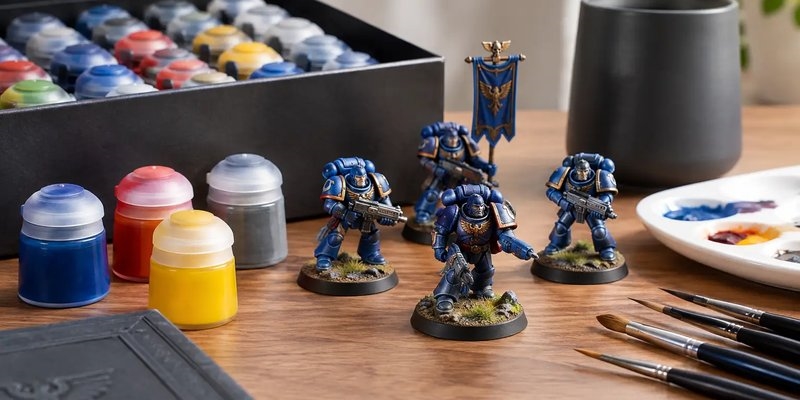
7 Best Warhammer Paint Sets for New Hobbyists
A new box of miniatures is exciting right up until you are staring at bare plastic, one starter brush and no idea which colours to buy. The best Warhammer paint sets remove that roadblock. They give you a workable palette, a few essential hobby tools and a sensible first project, without asking you to guess which 20 paint pots belong in your basket.
The right set depends on what you are building. A Combat Patrol collector, a parent painting with kids and a hobbyist returning after years away will not all need the same colours. The key is choosing a set that gets models on the table quickly while leaving room to grow your skills.
What makes a paint set worth buying?
A good Warhammer set is not necessarily the one with the most pots. It is the one that matches the miniatures on your desk and teaches a useful painting process. For most new painters, that means base colours for armour and clothing, a metallic, a shade paint for quick depth, and a brush capable of covering both larger panels and smaller details.
Citadel sets are especially straightforward for Warhammer because their paint names and suggested methods appear throughout Games Workshop painting guides. You can follow the familiar sequence of Base, Shade and Layer paints without having to translate colours between brands. That convenience has real value when you are painting your first squad.
There are trade-offs. Starter sets tend to focus on a particular faction or setting, so their palettes can feel limited once you move to another army. They are a foundation, not a lifetime collection. Check the current contents before buying, too, as set inclusions can change between releases.
The best Warhammer paint sets by hobby goal
1. Citadel Paint + Tools Set for a first toolkit
The Citadel Paint + Tools Set is usually the best starting point for someone who has bought their first Warhammer kit and owns almost no hobby gear. Rather than being tied tightly to one army, it focuses on practical paints and core tools such as clippers, a mouldline scraper and a starter brush.
This is a smart choice if you are assembling miniatures from a few different kits, beginning a custom colour scheme or sharing the hobby setup at home. Assembly tools are not glamorous, but clean joins and removed mouldlines make a bigger difference than many first-time painters expect.
Its limitation is that it may not include every colour needed for a particular box art scheme. Think of it as the practical backbone of a paint collection, then add the specific colours your chosen army needs.
2. Warhammer 40,000 Paints + Tools Set for Space Marine-scale projects
For new players entering the grim darkness of the far future, a Warhammer 40,000 Paints + Tools Set is often the fastest route from sprue to battle-ready force. These sets commonly include push-fit miniatures, paints, a brush and basic assembly tools, with colours chosen to suit the models inside.
The included figures matter. You are not practising on an anonymous test miniature - you are building a small, recognisable force with armour, weapons, faces and metallic details. That makes it easier to learn the basics of neat basecoats, shade washes and edge highlights before tackling a full Combat Patrol.
Choose this option if you want a guided first painting experience and like the miniatures bundled with it. If your heart is set on Orks, Tyranids, Adepta Sororitas or another army with a very different palette, a general tool set plus hand-picked paints may stretch further.
3. Warhammer Age of Sigmar Paints + Tools Set for variety and texture
Age of Sigmar starter paint sets are excellent for painters who want a little more variety in their first models. Fantasy miniatures often combine armour, skin, cloth, bone, leather and textured bases in the same small collection, giving you plenty of chances to see how different paint types behave.
This makes the set particularly friendly for younger hobbyists, family painting sessions and anyone who is more interested in the craft side than committing immediately to one large army. The paints are also useful beyond the included models. Metallics, earthy browns, bone tones and a dependable shade paint show up constantly across Warhammer armies, scenery and roleplaying miniatures.
The trade-off is focus. A mixed fantasy palette may not provide the exact armour colour needed for a planned 40K chapter. It is a great learning box, not always the most efficient army-building purchase.
4. Battle Ready sets for getting an army playable quickly
Battle Ready paint collections are aimed at one goal: getting a cohesive force painted without collecting dozens of individual pots first. They are worth considering when you have chosen an army and want colours that work together across infantry, characters and vehicles or monsters.
These sets are most useful after the absolute beginner stage. You will get better value from a faction-focused bundle when you already know you enjoy the army and plan to paint more than a single unit. The colour selection can save time, reduce guesswork and help keep the whole force visually consistent.
Before committing, compare the included paints against your planned scheme. Official box art is a handy reference, but it is not compulsory. A red-armoured force may need very different paints if you prefer weathered crimson, bright scarlet or a dark burgundy finish.
5. Citadel Contrast sets for speed-focused painters
Contrast paint is a strong option for hobbyists who want satisfying results with fewer stages. Applied over a light undercoat, it settles into recesses while leaving raised areas brighter. On textured surfaces such as fur, chainmail, robes, skin and organic creatures, it can create convincing depth very quickly.
A Contrast-focused set makes sense for large horde armies, board game miniatures, gaming groups preparing for a campaign or anyone with limited hobby time. It is also useful for painting terrain, where speed and broad colour coverage matter more than individual display-piece highlights.
Contrast is not magic, though. Smooth Space Marine armour can show pooling or patchiness if the paint is applied unevenly. You still need to control the brush, avoid letting paint gather in flat areas and work in manageable sections. Many painters get their best results by combining Contrast for cloth and details with traditional base paints for armour panels.
6. Army Painter starter sets for broader hobby use
Army Painter starter sets deserve a look if your painting table includes Warhammer alongside Dungeons & Dragons figures, board-game miniatures, 3D prints and terrain. Their ranges are designed as versatile miniature paints rather than being tied to a single game system, and many hobbyists appreciate the familiar dropper-bottle format for controlled dispensing.
This route can be good value when you want broad colour coverage from the start. Dropper bottles also make it easier to mix consistent colours on a wet palette, which helps when you need to paint 30 matching infantry models.
The downside for a brand-new Warhammer painter is that you may need to convert a Citadel painting recipe into equivalent colours. That is easy enough once you understand hue and value, but it adds friction at the beginning. If you want to follow Warhammer's named paint instructions step by step, Citadel remains the simplest choice.
7. A custom set for a specific army scheme
Sometimes the best set is not a boxed set at all. Once you know your army, building a small custom paint bundle can be more efficient than buying colours you will never open. Start with a primer, two or three main colours, a dark shade, a metallic if required, and paints for key details such as lenses, weapons, skin or basing.
For example, a Necron collection might begin with a metallic, a black or dark brown shade, a bright energy colour and a few earth tones for bases. A Stormcast Eternals force may benefit from metallics, a wash, a cloak colour and a contrasting accent. Keep the first purchase tight. You can always add highlight colours after the first unit shows you what the scheme needs.
Do not forget the supplies that make paint work
Paint is only half the setup. A primer suited to your intended finish gives acrylic paint something reliable to grip, while a palette helps you thin paints instead of applying them straight from the pot. Two thin coats are usually cleaner than one thick coat, particularly on flat armour panels.
A wet palette is one of the most useful early upgrades, especially in warmer Australian conditions where paint can dry quickly on the palette. You do not need an expensive brush collection either. One reliable medium brush, one smaller detail brush and a larger brush for drybrushing or terrain will cover most early projects.
When choosing sets, leave a little room in the budget for primer, glue if your kit needs it, and basing material. A painted miniature with a simple textured base looks far more finished than the same model standing on bare plastic.
Choose for the miniatures you want to paint next
The best value is not measured by the number of paint pots on the shelf. It is measured by how confidently you can finish the next five or ten models. Start with a set that suits your first army or starter box, paint a small unit all the way through, then choose your next colours based on what you enjoyed painting and what the models actually need. That is how a useful hobby collection grows - one finished miniature at a time.