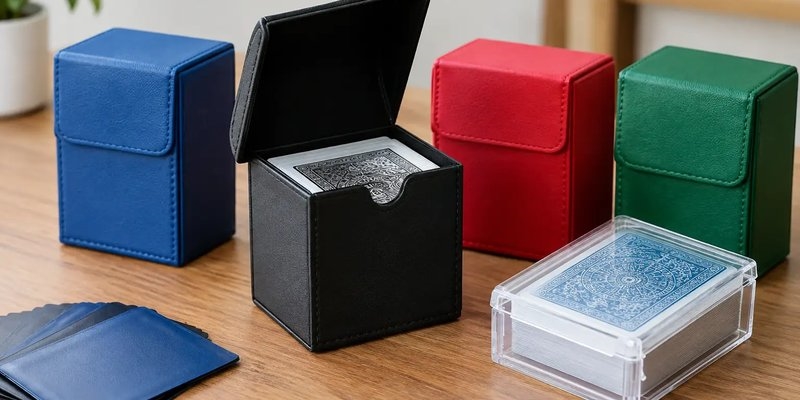
Best Card Deck Boxes for Players and Collectors
A deck box has one job: get your cards to the table in the same condition they left home. For a double-sleeved Commander deck, a foil-heavy Pokémon deck, or a prized One Piece collection, the best card deck boxes do far more than stop cards rattling around in a backpack. They protect corners, keep decks organised, make sideboarding easier and save you from the awful moment a deck spills across the shop floor.
The right choice depends on what you play, how you sleeve, and whether you need something compact for weekly events or substantial enough for a full day of trading. Capacity numbers are useful, but only when you understand what they mean in practice.
What Makes the Best Card Deck Boxes Worth Buying?
A good deck box should fit your deck without crushing sleeves or leaving so much empty space that cards slide around. It should open easily at the table, close securely in transit and stand up to regular use. The best option is not always the biggest or most expensive one. A player taking a 60-card Standard deck to Friday Night Magic has very different needs from someone carrying three double-sleeved Commander decks, tokens and dice.
Start with card protection. Sleeves are your first defence against scuffs, but a deck box protects the sleeves themselves from bent corners, pressure and moisture. A rigid outer shell is particularly valuable for foil cards, full-art lands, alt-art Pokémon and decks built around cards you do not want to replace.
Then consider access. Magnetic flaps are quick and satisfying at the table, while hinged lids remain attached so there is no loose top to misplace. Lift-off lids can work well for storage, but are less convenient in a busy event hall. Some boxes include thumb notches or wide openings that make it easier to remove a deck without pinching the top cards.
Finally, think about the rest of your gear. Dice drawers, token compartments and removable dividers can be genuinely useful, especially for Commander, Flesh and Blood and tabletop games with counters. They are less useful if they make a box too bulky for the bag you actually use.
Choose a Deck Box by Deck Size, Not Just Card Count
Capacity labels usually assume unsleeved cards or a particular sleeve thickness. That is why a box labelled for 100 cards may be perfect for a single-sleeved deck but too tight for 100 cards in inner sleeves and premium outer sleeves.
Standard 60-card decks
For Magic formats such as Standard, Pioneer and Modern, as well as many Pokémon and Yu-Gi-Oh! decks, a 80+ or 100+ card deck box offers comfortable room for a sleeved main deck, sideboard and a few tokens. If you prefer thick textured sleeves, err on the larger side. A snug box looks tidy, but overpacking can warp sleeves and make cards difficult to remove.
A compact single-deck box is the sensible choice for league nights and tournaments where you want to travel light. It also keeps different decks separated clearly when you own several lists for different formats.
Commander and other 100-card decks
Commander players should look specifically for 100+ capacity, and double-sleeved players should treat that as a starting point rather than a guarantee. A genuine double-sleeved 100-card deck can be noticeably taller than expected, particularly after the sleeves settle in.
Choose a box with a little room for tokens, but avoid one so oversized that your deck moves during transport. If you run a large token package, a two-compartment box can be better than squeezing everything into a single chamber. Keeping tokens separate also speeds up pack-up after a game.
Multiple decks and trade nights
Twin deck boxes and larger modular cases suit players who bring several decks to an event. They can carry two Commander decks, a main deck and cube, or separate decks for Pokémon and Lorcana without mixing cards together. Some designs include a central dice tray, which is handy for counters, damage dice and spin-downs.
For a trade night, however, use a dedicated binder or card storage box for trade stock. Deck boxes are designed to protect playable decks, not to hold loose rares, pages of cards or a growing pile of pulls from a booster opening.
Materials Matter: Plastic, Fabric and Premium Shells
Deck boxes generally fall into three practical categories. Basic polypropylene boxes are light, inexpensive and ideal for players who need several colour-coded boxes. They are a great starting point for casual decks, prerelease pools and keeping a collection organised at home. Their trade-off is that they can crack over time and their lids may not be as secure as premium designs.
Rigid plastic boxes offer stronger impact protection and often include a reliable clasp or magnetic closure. They suit regular event players, especially anyone carrying decks in a backpack alongside a playmat, water bottle and dice. Look for smooth interior surfaces, as rough moulding can catch sleeves over time.
Premium leatherette or Xenoskin-style boxes are popular with dedicated players and collectors. They feel substantial, resist everyday scuffs and commonly use magnetic flaps. Many also include removable trays and dividers. They cost more and take up more space, but the extra protection is worthwhile for a carefully tuned Commander deck or a high-value collection of foils.
Cardboard long boxes still have a place for bulk storage and sorting, but they are not a substitute for a deck box. They are vulnerable to moisture, can split at the corners, and do not offer enough protection for a deck travelling to an event.
Closures, Dividers and Dice Compartments
The closure is the detail most likely to frustrate you after repeated use. A loose lid is a risk when a bag tips over. A closure that is too stiff can become annoying when you need to present your deck, check a sideboard or pack up between rounds.
Magnetic closures are a favourite for a reason: they are fast, neat and usually secure. Check that the flap sits firmly against the box rather than relying on a tiny magnet. Velcro closures are functional but can wear out and collect lint. Snap closures are dependable, though some hard plastic clips can become brittle after years of use.
Dividers help more than many players expect. A divider can separate a main deck from tokens, store a sideboard, or stop a smaller deck sliding around. If you use dividers, choose ones tall enough to remain visible above the cards. Short dividers often disappear into the deck and make sorting harder, not easier.
Built-in dice trays are excellent for Commander, Warhammer card games and any deck using counters. They are less essential for a straightforward 60-card competitive deck, where a smaller box and a separate dice pouch may be the more efficient setup. Buy the compartment only if you will use it.
Match Your Deck Box to Your Play Style
Competitive players benefit from consistency. Using the same style of box for each format makes it easy to grab the correct deck before an event. Different colours are useful, but label boxes discreetly if you own multiple decks in the same game.
Collectors should prioritise rigid construction and a clean interior, particularly for decks containing expensive singles, signed cards or difficult-to-replace promos. Avoid storing cards long-term in a box that is too tight, and keep deck boxes away from direct sunlight, damp areas and hot cars. Australian summers can be brutal on sleeves, adhesives and card stock.
New players do not need to start with the fanciest option. A reliable entry-level 100+ box and quality sleeves will protect a first Commander or Pokémon deck well. Upgrade when your collection, travel schedule or preference for double-sleeving calls for it.
At CardTastic Collectables and Gaming, the useful question is not simply which box looks best on the shelf. It is whether it suits your deck, sleeves and game night routine. Bring your sleeved deck in if you are unsure of the fit. Testing the practical details before an event is far better than discovering your new box will not close five minutes before round one.
A deck box is small gear with a big effect on how confidently you play. Pick one that protects the cards you enjoy using, fits your actual setup and leaves you ready to sit down, shuffle up and get involved.