Collectible Card Condition Guide for Buyers
A card can look mint from across the table and still have enough whitening, surface scratching or edge wear to change its value dramatically. Whether you are checking a Pokémon illustration rare, a Magic: The Gathering staple, a One Piece alternate art or an AFL rookie card, condition is part of the card's story - and part of its price.
This collectible card condition guide explains how condition is commonly described, what to inspect before you buy or trade, and why two cards that look nearly identical can sell for very different amounts.
Why card condition matters
Condition affects collectability, resale value and grading potential. For a tournament player, a small spot of whitening on a sleeved Commander card may make no practical difference. For a collector building a binder of clean vintage holos, that same whitening can be a deal-breaker.
The value gap becomes sharper with scarce cards, older print runs, high-end chase cards and anything intended for third-party grading. A Near Mint copy is generally expected to present cleanly without obvious flaws. A Lightly Played copy may still look excellent in a sleeve, but it has visible evidence of use. Neither is automatically a bad purchase. The right choice depends on whether you are playing, collecting, grading or buying on a budget.
Condition is also not a single universal standard. Different retailers, marketplaces and grading companies can use slightly different thresholds. Read the stated condition, inspect supplied photos where available, and ask for clarification if a particular flaw matters to you.
Collectible card condition guide: common terms
Most ungraded singles are described using a condition scale. The wording may vary, but these categories are widely understood across TCGs and sports cards.
Near Mint
Near Mint, often shortened to NM, describes a card with minimal visible wear. It should be clean at normal viewing distance, with sharp corners, tidy edges and no major surface marks. Very minor manufacturing variation can exist, particularly on modern foil cards, but it should not distract from the card's presentation.
Near Mint does not always mean flawless or guaranteed to receive a gem-mint grade. Print lines, slight centring variation, tiny factory nicks or a faint surface mark may be present. Grading is stricter because it evaluates details such as centring and microscopic flaws under close inspection.
Lightly Played
Lightly Played, or LP, cards have minor but noticeable wear. You might see a small amount of whitening along an edge, light corner wear, faint scratching on a holofoil, or a few small surface marks. The card remains structurally sound and usually presents well in a sleeve.
LP is often the sweet spot for players who want premium cards without paying Near Mint prices. It is also a sensible option for older cards where pristine copies are scarce.
Moderately Played
Moderately Played, or MP, means wear is clearly visible. Corners may be blunted, edges can show whitening, and the surface may have scratches, scuffs or clouding. The card should still be legal for normal sanctioned play if it is not marked in a way that makes it identifiable while shuffled, but check the relevant tournament rules and speak to the organiser if unsure.
MP cards can be great for casual decks, cube lists and budget collectors. They are less suitable where presentation and future grading potential are the priority.
Heavily Played and Damaged
Heavily Played cards show substantial use: pronounced whitening, creases, dents, deep scratches, water marks or extensive surface wear. Damaged cards have defects that materially affect their appearance or structure, such as bends, tears, peeling layers, ink marks, trimming or heavy moisture damage.
These cards can still have a place. An old Reserved List Magic card, a playable vintage Pokémon trainer or a hard-to-find sports rookie may remain desirable despite heavy wear. Just make sure the price reflects the condition and that any flaw is understood before the deal is done.
How to inspect a card properly
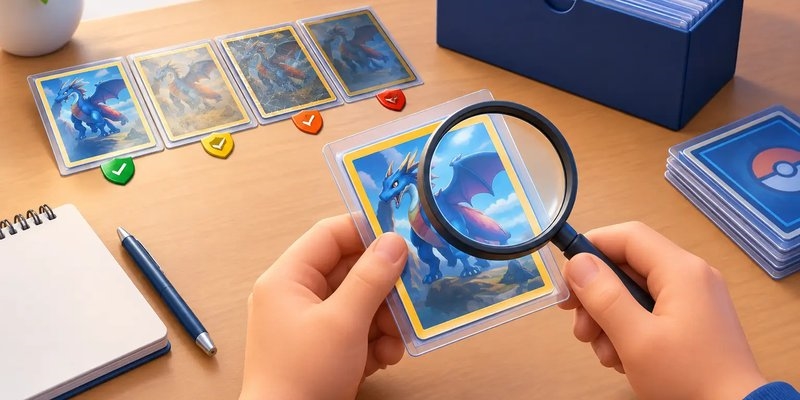
Good lighting matters more than most collectors expect. Hold the card under a bright, indirect light and tilt it slowly. This reveals holo scratches, dents, print lines and pressure marks that disappear when the card is viewed flat.
Start with the front and back surface. Look for scratches, scuffs, dents, indentations, stains and foil lifting. Then check all four corners and run your eyes around each edge for whitening, chipping and rough cuts. Finally, look at centring: compare the border thickness on opposite sides. Uneven centring may not matter for a binder card, but it can be crucial for grading.
For a quick inspection at a trade night or event, focus on the flaws most likely to affect the card's grade and value:
- corners and edges for whitening, fraying or soft spots
- foil surfaces for scratches, print lines and dents
- the back of the card, where wear is often easiest to see
- centring, especially on modern chase cards
- creases, bends, stains or alterations that should always be disclosed
Do not press on the card or flex it to hunt for defects. That can create the very damage you are trying to avoid. Handle raw cards by the edges, ideally with clean, dry hands.
Factory flaws versus play wear
A fresh pull from a booster can have imperfections straight out of the pack. Modern cards may show print lines, roller marks, rough cuts, off-centre borders, small foil dimples or light scratching. These are manufacturing flaws, not play wear, but they can still affect condition and grading results.
This is particularly relevant for collectors opening sealed product with a grading submission in mind. Pack fresh is not the same as gem mint. A card can go straight from booster to sleeve and still fall short because of centring or a factory surface issue.
Older cards bring a different set of expectations. Vintage holofoils often pick up scratching easily, while dark-backed cards can show edge whitening more clearly. A clean Lightly Played copy of a 1990s card may be much harder to find than a Near Mint modern card, so relative scarcity should shape your buying decision.
Condition, sleeves and tournament play
Card protection preserves condition, but it also protects the game. A card with a distinctive crease, bend or thick mark can become identifiable from the back while shuffled. In competitive play, that may be treated as a marked card issue even if the damage was accidental.
Use quality inner sleeves for valuable cards, then place them in opaque outer sleeves appropriate for your format. Replace sleeves when they become cloudy, split or unevenly worn. Keep decks in a rigid deck box, and avoid leaving cards in a hot car, direct sun or humid areas. Heat and moisture can warp foils, weaken adhesive and encourage mould.
For binders, use side-loading pages and store them upright without overfilling. Loose cards belong in penny sleeves and top loaders or semi-rigid holders, depending on whether they are for storage, display or grading preparation. CardTastic collectors and players often build protection into the purchase from day one because replacing a damaged chase card is rarely cheap.
Buying, trading and grading with confidence
When purchasing a single online, condition descriptions and clear images should work together. If only a stock image is shown, do not assume the exact card will be pristine. For higher-value singles, ask whether the listed condition accounts for specific concerns such as surface scratching, print lines, whitening or dents.
When trading in person, agree on condition before agreeing on value. Saying a card is "basically mint" can create an awkward moment once someone spots whitening on the back. A quick shared inspection under good light keeps trades fair and helps everyone leave happy.
Grading can add value, but it is not automatically the best path. Fees, postage, turnaround time and the risk of a lower-than-expected grade all need to be weighed against the likely market value. Grade cards with strong centring, clean surfaces and exceptional eye appeal, especially when the card is scarce or already commands a premium in high grade. For a beloved personal collection card, grading may be worthwhile simply because you want the protection and presentation.
The best condition choice is the one that suits how you enjoy the hobby. Buy Near Mint when clean presentation matters, choose Lightly Played when value matters more, and never be embarrassed to play a well-loved card. Inspect carefully, protect what you own, and let every card earn its place in your collection or deck.