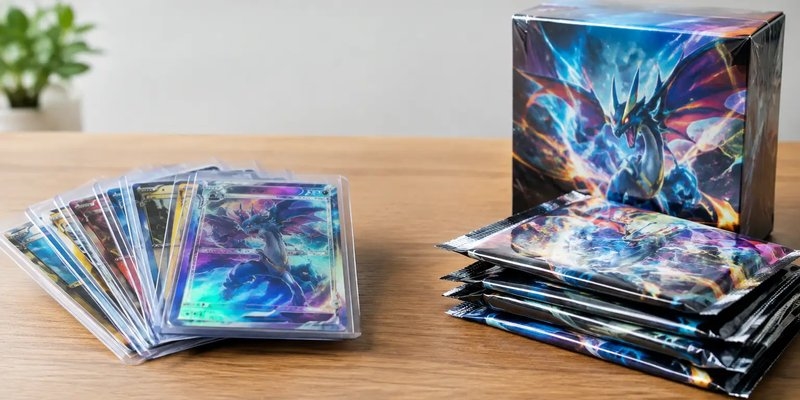
Single Cards Versus Sealed Product: Which to Buy?
You spot a booster box from a set you love, then notice that the one card you actually need is available as a single. That is the central decision in single cards versus sealed product: are you buying a specific result, or are you buying the experience and possibility of opening it yourself? Neither choice is automatically better. The right call depends on whether you are building a deck, completing a binder, collecting sealed displays, playing with mates, or simply chasing that pack-opening buzz.
Start With What You Want From the Purchase
The quickest way to choose is to name the job the product needs to do. If you need four copies of a key rare for a Pokémon, Magic: The Gathering, Flesh & Blood, One Piece or Disney Lorcana deck, singles are usually the sensible route. You know the card, its condition and its price before it reaches your hands. That certainty matters when a tournament is coming up or when your deck is only a few cards short.
Sealed product serves a different purpose. Booster packs, boxes, tins, bundles and preconstructed decks are made for opening, drafting, sharing and discovering. A sealed box can turn a quiet Friday night into a proper event with friends. A prerelease kit gives you the tools to learn a new format on even footing. A starter deck gets a new player into a game without asking them to understand every staple and rarity first.
Collectors can have two equally valid goals here. Some want the exact alternate-art, serialised, foil or vintage card that fits their collection. Others love a sealed shelf, with booster boxes and special collections preserved as snapshots of a favourite release. Those are different collections, so they need different buying habits.
When Single Cards Are the Better Buy
Singles are about precision. Rather than paying for the chance of finding a card, you put your budget directly towards the cards you will use or display. This is particularly valuable in constructed formats, where a deck needs consistency rather than a pile of exciting maybes.
Say you are upgrading an EDH deck and need a particular land cycle, a commander-specific staple and two showcase creatures. Opening random boosters from several sets is unlikely to get you there efficiently. Buying singles lets you put those funds into the cards that improve the deck immediately, leaving room in the budget for sleeves, a deck box and event entry.
The same applies to set collecting once the easy early pulls are out of the way. Opening a few packs can be a fun starting point, but chasing the final handful of high-rarity cards through more product is often expensive. Buying the remaining singles gives you a clean finish line.
Condition is another major advantage. When you buy a single, you can choose the condition level that suits the collection and budget. A near-mint copy may be right for a display binder or competitive deck, while a lightly played copy can be ideal for a casual cube or kitchen-table build. For older cards, language, printing and condition can all affect both price and appeal.
Singles are not always cheap, of course. New-release hype can push sought-after cards high, particularly when a card performs well at early events. Prices may settle once more product is opened, or they may rise when a card proves essential across multiple decks. If you are not in a hurry, watching how a set develops can be smarter than buying at the first peak. If you need the card for this weekend's event, however, certainty can be worth paying for.
When Sealed Product Makes More Sense
Sealed product is not just a less efficient way to find singles. It has uses that singles cannot replace.
Limited play is the obvious one. Drafting booster packs or building a sealed deck asks you to assess what is in front of you, make the best of an unfamiliar card pool and play games that feel different every time. For many players, those decisions are the most enjoyable part of a TCG. A booster box split across a draft night can create hours of gameplay, trades and stories that one high-value single simply cannot.
Opening packs also has genuine emotional value. The suspense of revealing a special illustration rare, textured foil or chase card is part of why people collect. It is fine to pay for that experience, provided you recognise it as entertainment rather than treating every pack as a calculated investment. Set a budget before opening, enjoy the reveal, and avoid trying to recover a disappointing opening by buying more packs than planned.
Sealed is also excellent for newcomers. Starter decks, League Battle Decks, Commander decks and other ready-to-play products give players a functional foundation. They often include useful reprints, themed strategies and enough structure to learn the game without the pressure of choosing dozens of singles on day one.
For sealed collectors, the appeal is more long-term and more personal. An unopened booster box from the set that introduced you to Pokémon, a favourite Magic plane, or an iconic sports-card release can be a meaningful display piece. Scarcity, print runs, reprints, set popularity and storage all affect sealed-market prices, so future value is never guaranteed. Buy sealed collections because you want to own them, not because a graph promised a result.
Single Cards Versus Sealed Product for Deckbuilders
For competitive and regular constructed play, a blended approach usually works best. Start with a preconstructed deck if it provides a playable base, then buy singles for the upgrades that make the list function. This avoids the common trap of opening boosters in search of one or two cards while ending up with a stack of cards that do not belong in the deck.
A player preparing for Standard, Modern, Pioneer, Commander, Pokémon Standard, Yu-Gi-Oh! Advanced Format or a local One Piece event should think in terms of deck roles. Which cards are required for the strategy? Which are flexible upgrades? Which can wait until after a few games? Purchase the essentials first, test the deck, then refine it with targeted singles.
There is still room for sealed at the table. Join prereleases, drafts and release weekends because they build familiarity with a set and keep the social side of the hobby alive. Just do not confuse a fun limited event with an efficient method for assembling a constructed deck.
Collecting Without Letting FOMO Set the Budget
New TCG releases move quickly. Preview cards appear, social feeds fill with spectacular pulls, and products can feel urgent before anyone has played a game with them. A little planning cuts through that noise.
Decide whether each release is a play purchase, a collection purchase or an opening-for-fun purchase. A play purchase might be a handful of singles and tournament entry. A collection purchase might be one sealed box for the shelf plus selected chase cards for the binder. An opening-for-fun purchase might be a set number of packs shared with friends. When the purpose is clear, it is much easier to stop at the budget you chose.
It also helps to separate market value from personal value. A low-priced card can be the centrepiece of a collection because it features a favourite character, artist or team. A costly card may be less satisfying if it has no place in your deck or binder. The best collections have a point of view, not just a total value.
A Practical Buying Rule
Buy singles when you know exactly what you need. Buy sealed when you want to play Limited, begin a new game, share an opening experience or keep a product unopened as part of a collection. If you want both, split the budget deliberately: one product for the fun of the release, then singles for the cards you still genuinely want.
CardTastic Collectables and Gaming sees both sides at the counter and around the event tables. The player after their final deck upgrade, the family cracking a few packs together, and the collector protecting a sealed display are all enjoying the hobby in a valid way. Choose the purchase that gives you the better next game, better binder page or better night with your community.