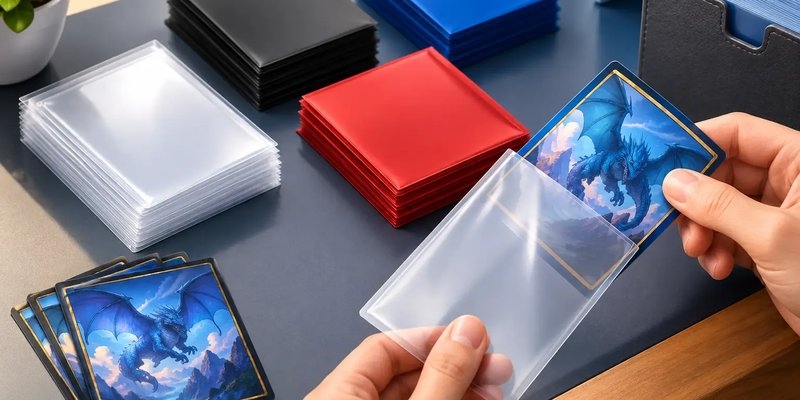
Trading Card Sleeves That Fit Your Cards
A freshly pulled chase card, a tuned Commander deck, and a favourite childhood Pokémon binder should not all be protected the same way. The right trading card sleeves preserve condition, make shuffling feel better, reduce marked-card problems at events, and save you from the heartbreak of seeing a valuable card scuffed by a loose sleeve.
For most players, sleeves are not an optional accessory. They are part of the game kit, alongside a deck box, dice and playmat. For collectors, they are the first layer of a sensible long-term storage setup. The trick is matching the sleeve to the card, the game, and how you actually use the cards.
Start with the right trading card sleeve size
Size comes first. A premium sleeve that does not fit properly will still leave cards exposed at the corners, make decks difficult to shuffle, or create too much movement inside the sleeve.
Most modern trading card games, including Magic: The Gathering, Pokémon, Disney Lorcana, Flesh and Blood, One Piece, Digimon and many sports cards, use standard-size cards. These are roughly 63.5 x 88 mm. Look for sleeves labelled standard size or standard trading card size.
Yu-Gi-Oh! uses smaller cards, often called Japanese size. These are about 59 x 86 mm. Standard sleeves will technically hold them, but the fit is loose and the extra material makes a deck feel awkward in hand. Japanese-size sleeves are the better choice for Yu-Gi-Oh! decks and other games using the same smaller card format.
Do not assume every product branded as a card sleeve is designed for your deck. Board game sleeves, tarot sleeves, mini European sleeves and oversized sleeves all have their place, but their measurements differ. Check both the card dimensions and the sleeve's stated internal size before opening the pack, particularly when sleeving older games or non-standard promotional cards.
Choose sleeves based on how you play
A casual kitchen-table deck has different needs from a deck heading to Friday Night Magic, a Pokémon League session or a larger competitive event. This is where sleeve material, finish and consistency matter.
For regular play, opaque-backed sleeves are usually the practical choice. They hide the back of double-faced cards and provide a uniform appearance across the deck. That uniformity matters in sanctioned play: worn, damaged or differently coloured sleeves can make individual cards identifiable, which may be treated as marked cards by event staff.
Matte sleeves have a lightly textured back and are popular with players who shuffle often. They generally resist glare, feel controlled during mash shuffles and do not show fingerprints as readily as glossy sleeves. They are a strong all-round option for Commander, Standard, Modern, Pokémon and Lorcana decks that see frequent play.
Glossy sleeves can make colours and artwork look particularly sharp, and some players prefer their smooth feel. The trade-off is that they may stick together slightly when new, show scratches more clearly, and become slippery in taller decks. They can still be excellent sleeves, especially for binders or decks with striking art, but they are not automatically the best option for every tournament deck.
Clear sleeves suit cards where you want the original card back visible, such as AFL, NBA and other sports cards. They are also useful for cube cards, tokens and some casual decks. For a constructed TCG deck, though, clear sleeves require extra care. Every card back must be in matching condition, and double-faced cards usually need opaque sleeves or checklist cards.
Inner sleeves and double-sleeving
Double-sleeving means placing a card in a close-fitting inner sleeve before putting it into a regular outer sleeve. It adds meaningful protection against edge wear, minor spills, dust and grime, particularly for decks that are played constantly or contain expensive singles.
There are two common inner-sleeve approaches. Top-loading inner sleeves open at the top, like a normal sleeve. Side-loading or bottom-loading inners place the opening away from the outer sleeve opening when installed correctly. This creates a more protected path around the card, although no sleeve setup is fully waterproof.
For competitive decks, use inner sleeves that are specifically made for the card size. A standard inner sleeve belongs inside a standard outer sleeve, while a Japanese-size inner goes inside a Japanese-size outer. Trying to force a card into an inner sleeve that is too tight can curl edges or damage corners. Using one that is too large defeats much of the purpose.
Double-sleeving has downsides. Your deck becomes thicker and heavier, so a 100-card Commander deck may need a roomier deck box. Air can also be trapped between layers at first. Sleeve the deck, stack it neatly, and let it sit under gentle, even weight for a short period before play. Avoid bending cards or pressing so hard that you create impressions.
Triple-sleeving, usually with an oversleeve around an art sleeve, is best reserved for specific uses. It can protect limited-edition sleeves or keep a favourite design clean, but it creates a very bulky deck and may not suit every event. Check organiser requirements before turning up with a heavily layered deck.
Art sleeves look great, but buy with a plan
Character art sleeves are a brilliant way to give a deck personality. A Pikachu deck, a favourite Commander, a One Piece crew or a Warhammer-themed casual build can feel more like your own with the right artwork. They also make a great gift for newer players building their first proper deck.
The practical question is durability. Some art sleeves are made for display and light play, while others are built with strong seals and a protective surface. If you use art sleeves every week, consider putting clear oversleeves over them. This helps preserve the printed backs, especially around the corners where sleeves wear first.
Keep an eye on tournament policy as well. Officially licensed art sleeves are commonly accepted, but they still need to be opaque, consistently oriented and free from obvious damage. A deck with sleeves that vary in wear can create problems even if the artwork itself is allowed.
If you are buying several packs for a large deck, buy enough from the same product line at once. Different print runs can have small differences in colour, texture or cut. Having 10 spare sleeves from the same batch is far more useful than having a mixed pile from old decks.
Sleeves for collecting are not the same as sleeves for play
A raw single card that is being stored, traded or prepared for grading needs protection, but it does not always need a shuffle-ready outer sleeve. A soft penny sleeve is useful for basic handling and should usually be the first layer before placing a card into a semi-rigid holder, top loader or suitable binder pocket.
For valuable cards, avoid sliding a bare card directly into a rigid holder. The hard plastic can scratch the surface or catch a corner during insertion. Put the card in a clean soft sleeve first, then use a holder that fits without squeezing it.
Binder choice matters just as much as sleeve choice. Side-loading, fixed-page binders generally offer better protection than loose pages in ring binders, where rings can dent or bend cards. Store binders upright or flat according to their design, away from direct sunlight, moisture and major temperature changes. A sleeve prevents surface scuffs, but it cannot stop heat warping foils or humidity affecting card stock.
For sealed packs, sealed product and graded cards, use storage options designed for their format rather than trying to make standard card sleeves do a job they were never intended to do.
Replace sleeves before they become a problem
Sleeves are consumables. Even quality sleeves eventually split at the seam, cloud up, gather grit or develop rough corners. Competitive players should inspect decks before events, especially after a long run of games or travel in a packed backpack.
Replace the full set when sleeves are visibly uneven. Swapping only the damaged sleeves can leave a few cards with a different texture or thickness, which is not ideal for tournament play. Keep spare sleeves for emergencies, but treat them as a short-term fix unless they are an exact match.
Clean your play area too. Fine grit caught inside a sleeve can act like sandpaper over repeated shuffles. Wipe down the table, keep food and drinks clear of the deck, and use a playmat where possible. A small habit such as putting your deck back in its box between rounds makes a real difference over a season of organised play.
Build a protection setup that suits your hobby
There is no single best sleeve for every card. A budget-friendly matte sleeve may be perfect for a weekly casual deck. Double-sleeved premium outers make sense for a high-value Modern deck or foil-heavy Commander build. Clear sleeves, penny sleeves and rigid holders are often the smarter combination for sports cards and collectible singles.
At CardTastic, the most useful starting point is simple: identify your card size, decide whether the cards are for regular play or collection storage, then allow room in the budget for a proper deck box or binder. Your cards are part of the hobby history you are building, so protect them in a way that lets you play, trade and enjoy them with confidence.