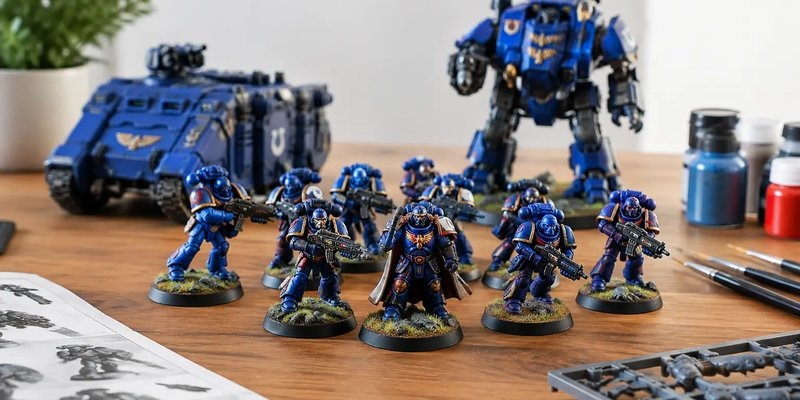
Warhammer Army Building Guide for First Lists
A new Warhammer force can look simple from the shelf: pick the box with the coolest miniatures, add paint, then get gaming. In practice, a good Warhammer army building guide starts one step earlier. The army you enjoy six months from now is usually the one that suits your preferred setting, budget, painting time and local games - not simply the unit that won the latest tournament.
Whether you are putting together a first Combat Patrol, starting a Spearhead force, or expanding towards larger matched-play games, build in stages. That approach leaves room to learn what your miniatures actually do on the table and stops a pile of unassembled sprues becoming an expensive source of guilt.
Start with the game and faction you want to return to
Warhammer is a broad hobby rather than one single rules experience. Warhammer 40,000, Warhammer Age of Sigmar, The Old World, Kill Team, Warcry and other specialist games have different army sizes, rules structures and entry points. Decide which game your mates play or which regular event you want to attend before committing to a collection.
Then choose a faction that makes you want to pick up a brush. Rules and points values change, sometimes substantially. A faction's core appeal lasts much longer. You might love the disciplined look of Space Marines, the ramshackle character of Orks, the sinister silhouettes of Soulblight Gravelords, or the combined-arms feel of Cities of Sigmar. There is no wrong answer if the models excite you.
It also helps to ask what part of the hobby matters most. Competitive players may favour armies with flexible tools and a deep range of units. Painters may want elaborate heroes, textured armour or large centrepiece models. Players who want reliable weekly games may prefer a compact force that is quick to transport and finish. Families and newcomers often get more value from a smaller format where every model has a job.
Build your first legal force before buying extras
Current rules should always be your reference point. Check the relevant faction rules, current points update and mission pack for the game you intend to play. Army construction changes over time, so avoid relying solely on an old video, a forum screenshot or a list printed in a previous edition.
For Warhammer 40,000, Combat Patrol is often the cleanest starting point because the format uses a defined force and removes much of the early list-building pressure. It lets you learn movement, shooting, charging, objectives and stratagem timing with a manageable number of models. In Age of Sigmar, Spearhead serves a similar purpose, offering a fast route onto the table with forces designed for the format.
If your goal is a larger game, begin by choosing an army rule or detachment that suits the units you genuinely want to collect. From there, give the list enough pieces to play the mission rather than buying only damage dealers. A useful force usually needs units that can hold objectives, threaten enemy units, move into awkward parts of the board and support the rest of the army.
This is where newcomers commonly overbuy characters. Heroes can be spectacular models, but they often need accompanying units to protect, enhance or lead. One well-chosen leader plus core units is generally more playable than three leaders and a tiny bodyguard. Likewise, an enormous tank or monster can be a brilliant later reward, but it may consume too much of a small army's budget and points.
Learn the battlefield roles, not just the datasheets
You do not need to memorise every profile before making a purchase. You do need a broad plan. Your force should have a way to score, a way to remove threats, and enough resilience or mobility to keep doing both after the first couple of turns.
Infantry are often your dependable scoring base. Fast units such as cavalry, bikes, jump troops or skirmishers can reach exposed objectives and complete mission actions. Heavy weapons, elite combat units, monsters and vehicles deal with targets your basic troops struggle to shift. Support pieces can improve durability, damage or movement, though their value depends on what they are supporting.
Balance does not mean taking one of everything. Some factions are naturally elite, while others succeed through numbers, speed or specialised combinations. It means knowing the purpose of every unit. If you cannot explain what a purchase does for your game plan, wait until you have played a few more matches.
Plan purchases in waves, not in one big order
A staged collection is kinder to your wallet and better for the hobby desk. Start with a boxed force or a small group of units that creates a playable foundation. Assemble and play it, even if it is only a learning game. Then add the unit that solves a problem you noticed: perhaps you lack anti-armour shooting, a durable objective holder, a fast scoring piece or a unit that can answer tough enemy infantry.
This method also protects you from the classic new-player trap of chasing a powerful list before understanding it. A tournament-winning army list may assume precise deployment, layered buffs, particular terrain layouts and a confident grasp of mission play. It may also stop being current after a balance update. Buy the models you like first, then tune the collection with experience.
Budget for the less glamorous essentials as well. Clippers, plastic glue, a mould-line remover or hobby knife, brushes, primer, paints, dice, measuring tools and a suitable storage solution all make a real difference. Miniatures transported loose in a backpack tend to lose delicate parts, and a proper case or magnetic storage setup becomes increasingly valuable as a force grows.
For Australian hobbyists, it is worth keeping projects realistic around work, school, sport and travel. A 10-model unit you can assemble and paint this month is more useful than a huge pile that will sit in the cupboard until next summer.
Make the painting plan work for your life
A painted army feels more personal on the table, but it does not need to be painted like an awards entry. Establish a repeatable recipe early: a primer colour, base colours, one shade or wash, and a highlight or drybrush can produce a cohesive force quickly. Test the scheme on a single rank-and-file miniature before committing it to a full unit.
Batch painting is efficient for troops, while characters are a great place to slow down and try new techniques. Paint five to 10 similar models at a time, then finish one hero as a palate cleanser. This keeps the army moving without making every session feel like factory work.
Basing deserves attention because consistent bases tie different units together. Sand, texture paint, tufts, rubble or a simple painted ground effect can make even a straightforward colour scheme look deliberate. Choose a base style that contrasts with the miniatures, so dark boots do not disappear into dark ground.
If a colour scheme feels intimidating, simplify it. Two main colours, a neutral and one spot colour often look stronger than six competing paints. You can always add weathering, transfers, freehand markings and glowing effects later.
Play early, ask questions and refine the list
Your first games are data gathering, not a final exam. Notice which units consistently contribute, which never reach the action, and what situations leave you without an answer. A unit that underperforms once may have been deployed poorly or matched into its worst target. Give it several games before writing it off.
Play with clear expectations. A casual learning game is the right place to pause over rules, explain abilities and take back obvious mistakes. A competitive event rewards knowing your list, bringing your own dice and tools, and keeping games moving. Both styles are valuable, and a healthy local community needs room for each.
This part of the hobby is where a physical gaming store earns its place. Seeing armies in person, asking how a unit performs, joining a beginner game or attending organised play gives you context that a product photo cannot. CardTastic's community of players, painters and collectors can help turn a rough first list into an army with a clear direction.
A Warhammer army building guide for long-term enjoyment
The strongest collection is not necessarily the one with the highest win rate this month. It is the one you can keep expanding, painting and putting on the table with genuine enthusiasm. Start small, learn the missions, buy with a purpose and let each game show you what comes next. Your army will grow more naturally - and every finished unit will have a story behind it.