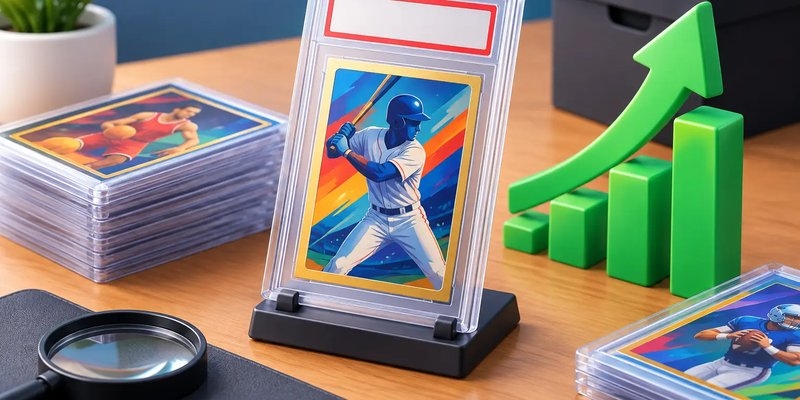
When Does Card Grading Add Value to Cards?
A freshly pulled card can look flawless under the kitchen light, then show a soft corner, print line or off-centre border under closer inspection. That gap between “pack fresh” and genuinely top condition is exactly why card grading matters. For some cards, a respected grade can turn a prized pull into a more saleable, protected collectible. For others, it can cost more than the card is worth.
The useful question is not whether every good card should be graded. It is whether grading serves your goal: preserving a personal favourite, proving condition to a buyer, building a premium collection, or chasing a meaningful value increase.
What card grading actually measures
A third-party grading company examines a card’s physical condition, assigns a numerical grade and seals it in a tamper-evident plastic holder, commonly called a slab. The exact scales and labels vary between companies, but higher grades generally indicate fewer visible flaws.
Assessors typically examine centring, corners, edges and surface. A card may have sharp corners but still lose marks for a scratch, an indentation, factory print line, whitening on the reverse, edge chipping or uneven borders. Older cards also bring different challenges, including holofoil scratching, fading, staining and warping.
The grade is an informed professional assessment, not a promise that every collector will see the card identically. Condition has subjective elements, especially near the top end of a scale. Two copies that look almost identical in a binder can receive different grades because one has a tiny surface issue visible only under angled light or magnification.
Grading can also include authentication, depending on the service and submission type. That can be especially valuable for high-value vintage Pokémon, signed cards, scarce sports cards or cards where counterfeits are common. Authentication is useful, but it should never replace careful buying from trusted sources and learning the tell-tale details of the cards you collect.
When card grading is worth the cost
A grade has the most impact where there is strong demand, a real condition premium and enough value to cover every cost involved. That normally means a sought-after card, not simply a rare one. A popular Charizard, a key One Piece manga rare, a vintage Pokémon holo, a high-end NBA rookie or an iconic Magic: The Gathering Reserved List card may have an active market for high grades. The same is not always true of a low-demand ultra rare from a recent set.
Population matters too. If thousands of copies already hold top grades, another top-grade slab may be easier to sell but not dramatically more valuable. If very few copies have achieved a top grade, the premium can be substantial. This is why collectors look beyond raw sale prices and ask what specific grades have actually sold for.
A card’s raw value is a practical starting point, but it is not the whole calculation. Add the grading fee, shipping to and from the grader or submission service, insurance, exchange-rate effects where relevant, and the chance of receiving a lower grade than expected. For Australian collectors, international postage and turnaround time can make low-value submissions particularly hard to justify.
Personal value counts as well. Grading a childhood favourite, a first tournament top cut card or the centrepiece of a Pokémon collection can be worthwhile even if it will never return a profit. A slab offers display protection and a permanent record of the card’s stated condition. Just treat it as a collecting decision rather than an investment calculation.
Start with a realistic pre-grade inspection
Before spending on a submission, inspect the card slowly in clean, bright light. A desk lamp angled across the surface can reveal scratches and dents that a straight-on view misses. Use a soft, clean surface and handle the card only by its edges.
Check the front and back centring first. Slightly uneven borders are common, particularly on modern cards, but noticeably shifted artwork can cap a card’s grade. Then inspect all four corners and edges for whitening, fraying, nicks or lifting. Finally, tilt the card to inspect the surface for scratches, scuffs, roller marks, print lines, dents and stains.
Do not clean, rub or attempt to repair a card. Even well-intentioned wiping can create fine scratches, while pressing creases or trimming edges is alteration and can lead to rejection or an altered designation. If there is dust on a card, a gentle air blower intended for camera equipment is safer than touching the surface, but restraint is usually the best approach.
For foil cards, be realistic. Foil surfaces often show scratches that are invisible in a sleeve, and dark card backs can reveal tiny points of whitening. For modern TCG cards, factory quality control varies between sets and print runs. A card can be freshly opened, authentic and highly collectible without being a top-grade candidate.
Choosing a grading service
The right grading company depends on the card, your selling market and what you value. Some services have stronger recognition for vintage sports cards, others are particularly familiar to TCG collectors, and some offer useful subgrades or different slab styles. Buyer confidence is usually strongest when the grader is established and the grade is easy to verify.
If you plan to sell, look at comparable sales for the same card in the same grading company’s holder. Do not assume that a 10 from every company carries the same price. Brand recognition, grading standards, slab design and buyer preference all affect demand.
Australian collectors also need to decide between sending directly to a grader and using a reputable group submission service. A group submission can reduce per-card shipping costs and make paperwork less painful, especially for several cards. The trade-off is that you are working to another party’s cut-off dates and process. Direct submission gives you more control, but international logistics can be more expensive.
Before sending anything, read the current declared-value rules, insurance options, turnaround estimates and packaging instructions. Declaring a card far below its replacement value to save money is a poor gamble. Keep clear photos of each card before packing it, including front, back and any identifying details.
Prepare cards for submission without creating problems
A grader needs to remove each card safely. The usual approach is a clean penny sleeve placed inside a semi-rigid holder, with the opening accessible for removal. Avoid taping directly to the card or sleeve, and do not use hard screw-down holders unless the grading company specifically permits them.
Make sure your hands and workspace are clean, dry and free of food, paint, hobby dust or loose debris. That matters whether you have been building a Warhammer miniature, sorting a Commander deck or opening a Pokémon booster box. Keep the cards flat, protected from heat and away from direct sunlight while waiting to submit.
For a larger submission, record each card’s set, card number, variant and declared value carefully. A missing variant detail can create delays or an incorrect label. Take your time with the form. It is much easier to check a card list at home than fix a mistake after an overseas parcel is already moving through the post.
Graded cards are not automatically better for every collector
A slab is excellent for long-term display, high-value storage and clear condition signalling. It is less convenient if your goal is to play the card. A graded Lorcana enchantment or Magic serialised card may look brilliant in a collection case, but it cannot go straight into a deck for Friday night play.
Raw cards also give collectors more flexibility. You can keep them in a binder, upgrade them over time, trade them easily at events and enjoy the artwork without committing to a final grade. For many modern cards, a sleeve, rigid toploader or quality binder provides the protection needed at a much lower cost.
There is also a timing question. If a card is riding a release-week spike, grading may take longer than the market excitement lasts. Conversely, a genuinely iconic card can reward patience, particularly if it is already scarce in high condition. Market demand, not the plastic holder alone, creates lasting value.
The best submissions are deliberate: cards you have inspected carefully, can afford to have away for a while, and would still be happy to own if the grade comes back lower than hoped. If you are unsure, bring the card along to CardTastic and talk through its condition with fellow collectors before committing. A careful look now is far cheaper than a disappointing grade later.