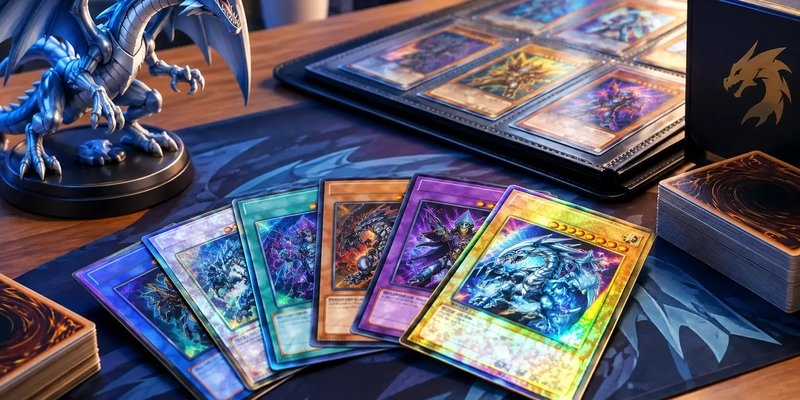
Yu-Gi-Oh! Card Rarity Guide for Collectors
A card can look shiny, old, or wildly expensive and still be misunderstood. This Yu-Gi-Oh! card rarity guide helps you identify what is actually in your binder or booster pull, from a straightforward Super Rare to premium treatments such as Ultimate, Ghost and Quarter Century Secret Rares. More importantly, it explains why rarity is only one part of a card's collectability.
For players, rarities can make deck upgrades feel special without changing the text or legality of a card. For collectors, they help tell the story of a set, an era, and a particular printing. Knowing the difference can also prevent a common mistake: assuming every foil is valuable, or overlooking an older version with a genuinely scarce print treatment.
How Yu-Gi-Oh! card rarity works
Rarity describes how a card was distributed within a particular product and how it was finished. It is not a universal ranking that applies equally to every Yu-Gi-Oh! release. A Secret Rare from one reprint set may be plentiful, while a Super Rare from an older booster can be considerably harder to find in clean condition.
The same card may also appear at several rarities over its life. A competitive staple might first arrive as an Ultra Rare, receive a lower-rarity reprint for accessibility, then return in a premium Collector's Rare or Quarter Century Secret Rare version. All may be legal if the card is legal in the format, but collectors and players may prefer different copies for very different reasons.
Start by checking the card's set code, found beneath the artwork on most modern prints. The code identifies the product and release rather than the rarity itself, but it gives you the context needed to compare the correct printing. Name foil, artwork foil, border treatment and set-symbol styling are then the main clues.
The core Yu-Gi-Oh! rarities
Common
Commons generally have no foil treatment. They are the backbone of most sets, especially in modern products designed to make useful cards easier to obtain. That does not mean they are worthless. Older Tournament Pack cards, difficult-to-find promo cards and playable cards from limited print runs can all command interest despite being Common.
A non-foil card should always be checked against its exact set code before being written off. Age, condition, demand and supply matter more than a foil stamp alone.
Rare
A traditional Rare has a silver foil card name but non-foil artwork. This was a familiar sight in many earlier booster sets. In some recent product lines, standard Rares are absent or used differently, so do not assume every set follows the same pull structure.
Super Rare
Super Rares feature foil artwork with a non-foil card name. The foil is usually easy to spot when tilted under a light, while the name remains plain. Super Rares are common enough in many modern booster releases to be affordable deck upgrades, but an older or desirable Super Rare can still be a serious collector piece.
Ultra Rare
Ultra Rares combine foil artwork with a gold foil card name. They are among the most recognisable Yu-Gi-Oh! rarities and have appeared in booster sets, tins, special editions and promotional products over many years. Because Ultra Rare has been used so widely, the label alone says little about price. A current set Ultra and a first-print, high-demand vintage Ultra are not comparable just because both carry gold lettering.
Secret Rare
Secret Rares have foil artwork and a reflective, rainbow-style foil name. Their artwork foil traditionally includes a diagonal holographic pattern, although the precise finish can vary by printing era and region. Secret Rare is often associated with headline cards in core booster sets, but special releases can place many Secret Rares in the same product.
When assessing one, compare it with the exact set and printing. A modern Secret Rare can be a popular binder card or tournament staple, while an early Secret Rare in Near Mint condition may be much scarcer than its name suggests.
Premium foil treatments collectors look for
Yu-Gi-Oh! has produced numerous premium rarities, and these are where close inspection matters most. Similar-looking foils are not necessarily the same rarity.
Ultimate Rare
Ultimate Rares are known for their embossed, textured finish. Depending on the era, the artwork, border, attribute icon and other card elements can show raised detailing. The texture is part of the card stock and print treatment, not simply a glossy surface effect.
Older Ultimate Rares remain favourites with collectors because the finish is distinctive and many have not been reprinted in the same style. They are also condition-sensitive. Surface scratching, edge wear and small indentations can be much more noticeable on textured foils.
Ghost Rare
Ghost Rares use a pale, three-dimensional holographic artwork that can appear almost washed out straight on, then sharply detailed when angled. They are among the most visually dramatic Yu-Gi-Oh! treatments and are often tied to iconic monsters or special releases.
Ghost Rares need careful handling. Their reflective surfaces can show print lines, scratches and scuffs easily, so examine both the front and back under good light before assessing condition or trading value.
Collector's Rare
Collector's Rares have an etched, highly textured foil treatment across much of the card. The pattern is especially obvious on the frame and artwork when viewed at an angle. These cards have appeared in selected side sets and are aimed squarely at collectors who want premium versions of featured cards.
They can be desirable even when the card is not a tournament staple, but demand still varies. Fan-favourite archetypes, artwork appeal and the set's popularity all influence the market.
Starlight Rare and Quarter Century Secret Rare
Starlight Rares use an all-over shimmering foil effect and were generally scarce highlights in selected sets. Their visual impact and limited distribution made them a premium chase rarity.
Quarter Century Secret Rares were introduced for Yu-Gi-Oh!'s 25th anniversary celebration. They use a sparkling Secret Rare-style finish with a distinctive Quarter Century emblem. They appeared across anniversary-era products, including reprints of celebrated cards, so it is especially important to identify the product code rather than relying on appearance alone.
Other premium names, including Platinum Secret Rare and Prismatic Secret Rare, have also been used in particular products and periods. Product packaging and official set information are useful references, but the card's physical features and set code remain the best starting point when sorting a collection.
Rarity is not the same as value
The biggest takeaway in any Yu-Gi-Oh! card rarity guide is simple: rarity affects value, but it does not decide it. A lower-rarity card can be more expensive than a flashy high-rarity card when players need it for a competitive deck, when supply is low, or when the card comes from an older and less-opened product.
Condition is equally important. Near Mint cards with clean corners, minimal surface wear and no creasing are usually the benchmark for collector pricing. Lightly Played may be perfectly suitable for a deck, while a crease, dent, water damage or heavy scratching can dramatically reduce the value of a collectible print. Foils deserve extra scrutiny because factory print lines and edge chipping are common discussion points among serious collectors.
Edition, language and regional printing can also change demand. First Edition cards from older releases often attract greater collector attention, but this is not a rule that automatically makes every card valuable. Modern releases use edition markings differently, and some reprints are sought after precisely because they offer an affordable way to play an expensive card.
A practical way to identify a card
When you pull out an unfamiliar foil, avoid judging it from one feature. Read the full card name and set code first. Then inspect the name lettering, artwork foil, texture and any anniversary or rarity stamp. Compare only with cards from the same set or the same known print run.
If you are sorting a large collection, place cards into broad groups first: non-foils, silver-name Rares, gold-name Ultras, rainbow-name Secrets and textured or specialty foils. This makes the detailed checks much quicker. Keep valuable cards in fresh sleeves and rigid protection where appropriate, particularly older foils that can pick up surface damage in a crowded binder.
For trades, be clear about the exact printing and condition. Saying “Blue-Eyes Secret Rare” is not enough when several Secret Rare versions exist. The set code, language, edition details and an honest condition description make a trade fairer and save awkward surprises across the table.
The best collection is not always the one with the most expensive foils. It is the one you understand, protect and enjoy pulling out for a game night, a trade binder chat, or a closer look at the artwork that made you collect Yu-Gi-Oh! in the first place.